
Stachybotrys (Also ‘Stachy’ or ‘Black Mold’)
Stachybotrys chartarum, commonly known as “black mold,” is a greenish-black microfungus that has gained notoriety due to its potential health impacts and association with water-damaged buildings. “Black mold” produces slimy spore colonies and thrives exclusively in environments with sustained moisture, whether from water damage, leaks, condensation, or flooding. Black mold colonizes on or inside of high-cellulose materials, making modern building materials like drywall, fiberboard, and paper vulnerable to infestation.
Health concerns associated with Stachybotrs chartarum stem from its ability to produce mycotoxins, which pose risks to both humans and animals. While black mold requires constant moisture to establish and maintain growth, it spreads through tiny airborne spores that can settle on surfaces throughout indoor spaces.
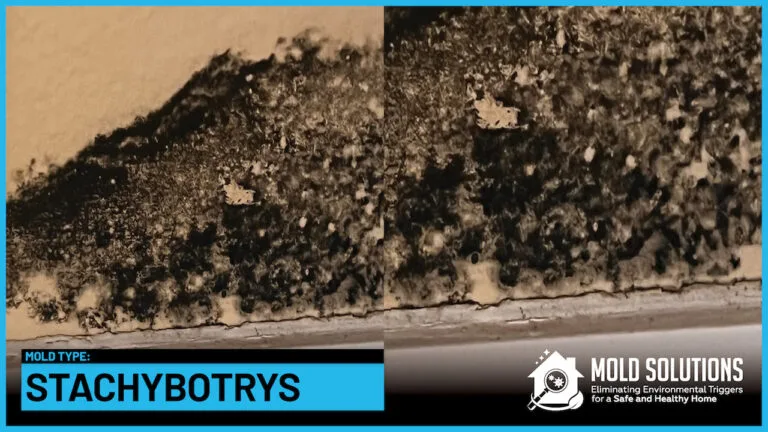
Simply — ‘Black Mold’ usually looks darker, fuzzier, wetter and gooier than most other molds, and it needs a lot of water to grow, over a long period of time. Think of Black Mold or ‘Stachy’ as slimy, gooey, dark greenish or black, fuzzy and voluminous if dried out.
Stachybotrys chartarum is visually distinctive, presenting as a greenish-black or dark black growth that often appears slimy or wet when viable [‘alive’—though ‘dead’ molds can be problematic too]. Black Mold colonies typically have a dark, sooty appearance and may appear in patches or larger areas depending on the extent of moisture exposure. Unlike some molds that appear powdery or fuzzy, S. chartarum produces its spores in slimy heads, giving it quite a distinctive texture that can help differentiate it from other mold species. The individual spores themselves are microscopic and become airborne when disturbed, though they’re invisible to the naked eye during dispersal.
Black Mold is predominantly found in indoor environments where chronic moisture problems exist, particularly thriving on materials with high cellulose content like gypsum board (drywall), fiberboard, paper products, ceiling tiles, and cardboard. Common locations include water-damaged walls and ceilings, areas affected by plumbing leaks, basements with poor ventilation or flooding history, and spaces around windows where condensation regularly occurs. S. chartarum is especially problematic in buildings that have experienced water intrusion like floods, roof leaks, or persistent humidity issues. The mold actively degrades the cellulose in these materials as it grows, potentially compromising structural integrity over time.
At Mold Solutions, we’ve seen Black Mold most commonly in these areas:
- HVAC Units, A/Cs, Air Ducts.
- Bathrooms (near or under toilets, bathtubs, around or under showers).
- Sub-flooring, carpeting, wood flooring, specifically after a hurricane, flood, or leak.
- Certain crawlspaces (pretty rare compared to the above).
Constant moisture is the absolute requirement for Stachybotrys chartarum growth—without sustained water availability, this mold cannot establish or maintain colonies. Unlike some mold species that can tolerate periodic drying, S. chartarum needs consistently high humidity levels or direct water contact to survive. This moisture dependence means the mold is strongly associated with specific water damage scenarios including active leaks, flooding, severe condensation problems, and water infiltration through building envelopes. The mold spreads indoors by releasing spores that settle on damp surfaces, where they can germinate if moisture conditions remain favorable. Addressing and eliminating moisture sources is therefore the single most critical factor in preventing S. chartarum colonization.
Black Mold produces mycotoxins, which are associated with various health risks when people or pets are exposed to them. Short-term exposure can cause respiratory symptoms including coughing, wheezing, and throat irritation, as well as headaches, fatigue, and skin irritation in sensitive individuals. People with pre-existing respiratory conditions, allergies, compromised immune systems, or young children may experience more severe reactions. Long-term or heavy exposure to S. chartarum has been linked to more serious health concerns, a condition sometimes referred to as mycotoxicosis. Pets can also be affected by exposure, experiencing similar respiratory distress and potential toxin-related effects.
Preventing Black Mold growth comes down to stringent moisture control and rapid response to any flooding or water. You want to avoid stagnant water, and elevated moisture levels above all else. Keeping indoor humidity below 50%, having proper ventilation in bathrooms and kitchens, promptly repairing any plumbing leaks or roof damage, and addressing condensation issues around windows and pipes. Regular inspection of areas prone to moisture accumulation can help identify problems before mold becomes established. Any water damage should be dried within 24-48 hours to prevent mold colonization.
When any mold problem exceeds 10 square feet (about the size of a home’s average window), when mold exists in HVAC systems, or when it’s spread to structural components of a building—carpeting, sub-flooring, etc.,—or if you’re unsure whether you have a mold problem or how large it actually is, you should call a professional.
Also, if mold growth resulted from contaminated water (like storms or sewage) or if people in the building are experiencing health symptoms, professional assessment and remediation is strongly recommended.
Professional help is also best if you’re not sure why the mold grew—what the moisture source is or was.
Property owners dealing with insurance claims related to water damage and mold should also consider professional documentation and remediation to ensure thorough resolution and proper restoration of affected areas.
